The best cast iron skillet sits flat, has a cooking surface you can live with, a size and weight that suit the person using it, and handles you can actually hold. All cast iron cooks well. A higher price buys finish (a smoother surface cleans easier), ergonomics (balance, a helper handle, a better grip) and consistency. A $30 pan is a good pan. A pricier one is worth it only if those things matter to you.
- Check flatness first. A wobbly pan is a bad pan at any price.
- Buy a 10-inch if you’re buying one pan.
- Lift it with your arm out before you decide.
- A helper handle matters more than a pound of weight.
Is expensive cast iron worth it?
Honestly: not for the cooking itself. Iron is iron, and a well-used budget pan will sear as well as anything. What you’re paying for is everything around the cooking.
| Typical budget pan | Typical premium pan | |
|---|---|---|
| Cooking | Excellent | Excellent |
| Cooking surface | As-cast, pebbly | Often machined or ground smoother |
| Cleanup | More scrubbing | Usually easier |
| Weight and balance | Often heavy, short handle | Varies widely; some are heavier |
| Handles and spouts | Basic | Often a helper handle, spouts, better grip |
| Flatness and QC | Varies | Usually tighter, but not guaranteed |
The other route is to buy a cheap pan and sand it smooth yourself. It works, but count the cost: hours, a respirator, the risk of an uneven floor, and starting the seasoning over (see Can’t I just sand one?).
“$175/(number of times you’ll use it) = dollars per happy moment.”
— r/castiron, on whether premium pans are worth it · thread
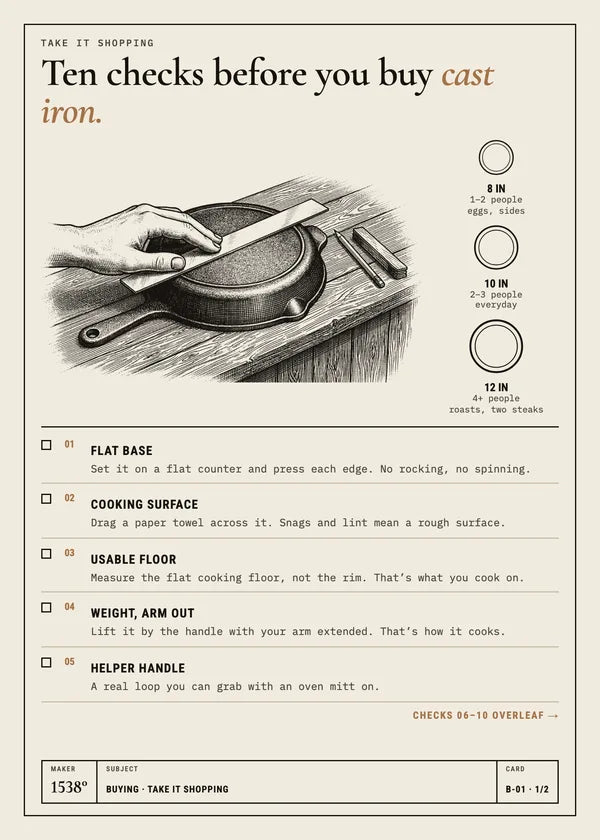
The ten checks.
You can do all ten in a store in five minutes. Online, ask for the measurements and read the one-star reviews for flatness and handle complaints.
Flat base
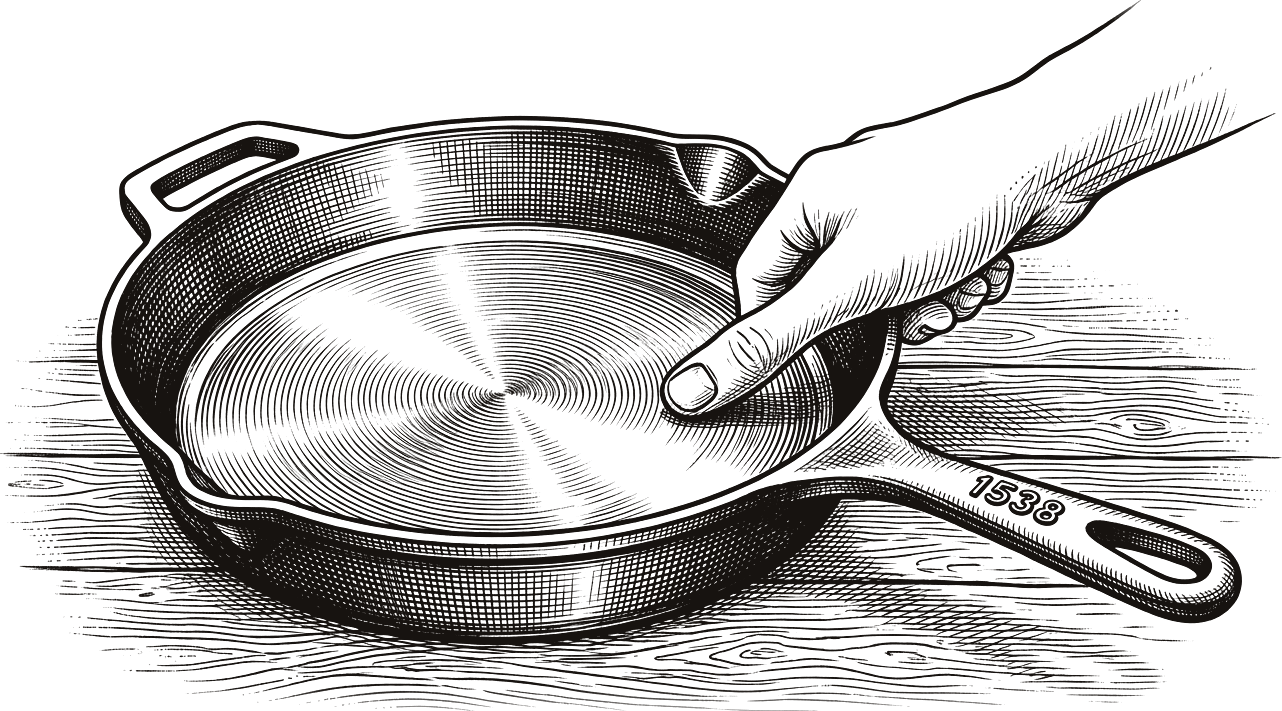
How: Set it on a flat counter and press each edge. It shouldn’t rock or spin.
A pan that rocks heats unevenly and slides on glass and induction tops. Wobble is a common complaint in reviews, at every price.
Cooking surface
How: Drag a paper towel across the inside. Snags and lint mean a rough surface.
Rough is fine for cooking but harder to clean. Smooth wipes clean. See Smooth vs rough.
Usable floor
How: Measure the flat cooking floor, not the rim.
Pans are sold by rim diameter. Sloped walls mean the flat area you cook on is smaller, sometimes by a lot.
Weight, arm out
How: Lift it by the handle with your arm extended.
That’s how it’ll be lifted, full of food. Most of the strain lands on the wrist.
Helper handle
How: Check for a real loop on the far side that you can grab in an oven mitt.
Two hands turn a heavy lift into an easy one. Little nubs don’t count.
Main handle
How: Feel the underside for sharp edges. Look for a hanging hole.
You’ll grip it thousands of times. Iron handles also get hot, so plan for a mitt.
Pour spouts
How: Spouts on both sides work for left- and right-handed pours.
Draining fat without a spout is how grease ends up on the burner.
Casting
How: Look for pits, voids, cracks or rough grinding marks, especially on the rim.
Quality control varies from pan to pan, even within one brand.
Factory seasoning
How: It should be even and dry to the touch: no tacky spots, no bare patches.
Expect the color to change as you cook. That’s normal.
Warranty
How: Read what it covers, and for how long, before you pay.
“Lifetime” can mean different things.
What size cast iron skillet should you buy?
If you’re buying one pan, get a 10-inch. It cooks for two or three, fits the oven and a standard burner, and is noticeably easier to lift than a 12-inch. Get a 12-inch if you regularly cook for four or more, want two steaks side by side, or bake for a crowd. An 8-inch is a great second pan for eggs and sides.
You can cook less in a big pan, but you can’t cook more in a small one. Unless you can’t lift it.
Weight is about your wrist.
Ask people what’s wrong with their cast iron, and “too heavy” comes up again and again: in reviews, from older cooks, and from anyone with sore wrists. But the problem is less the weight itself than where it sits. Held by one handle, the pan is a lever, and the wrist takes all of it. Add a second hand on a helper handle and the lever on your wrist mostly goes away.
Lighter pans exist, mostly by making the walls thinner. That makes them heat faster but hold less heat, so searing and baking are less forgiving. For most people, a helper handle and the right size do more than shaving a pound. If you want lighter, look at carbon steel.
Your first week.
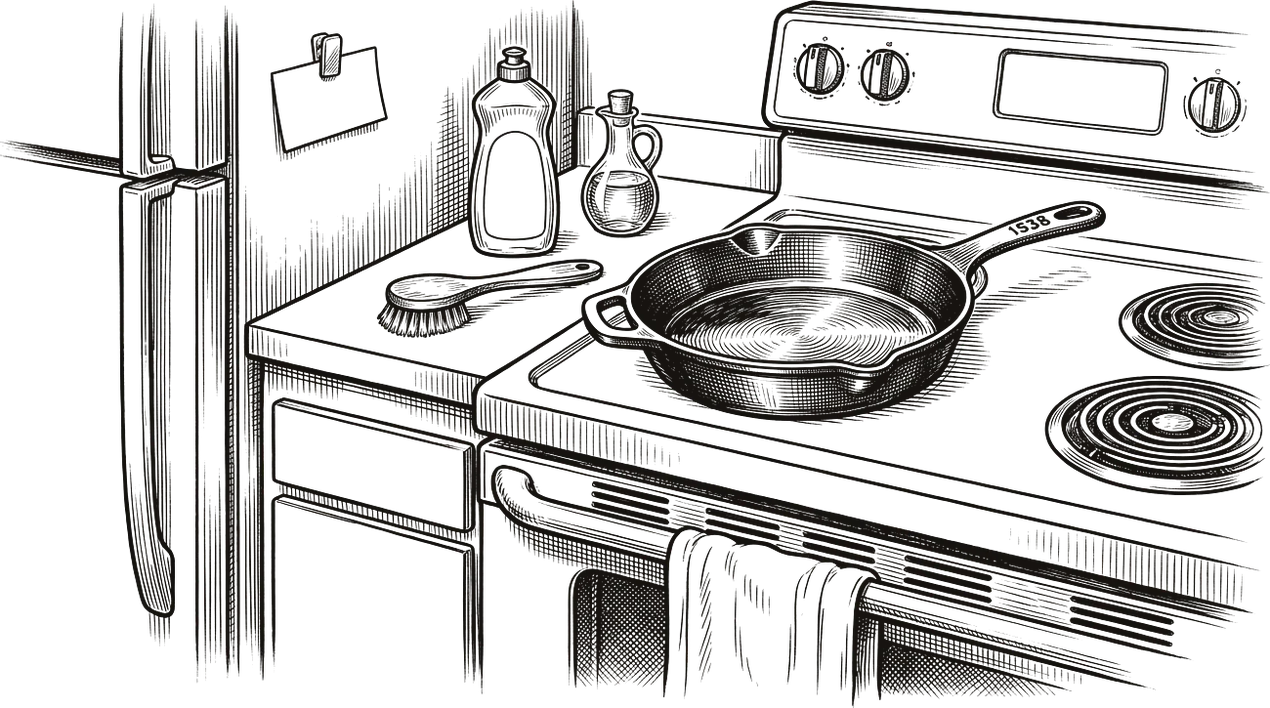
New pan? Wash it with warm soapy water, dry it on the burner, wipe on a thin coat of oil, and start with fatty cooks: bacon, smashed potatoes, a seared steak. Save eggs for week two. The full routine is in How to clean cast iron.
Questions
What is the best cast iron skillet?
The one that sits flat, has a surface you can live with, and a size and weight that suit the person cooking. Use the ten checks above. They matter more than the brand.
Is there a difference between cheap and expensive cast iron?
They cook much the same. The differences are in surface finish (smoother cleans easier), weight and balance, handles, flatness and quality control.
What size cast iron skillet is most useful?
A 10-inch for most households of two or three. A 12-inch if you cook for four or more, or want room for two steaks.
Is there such a thing as a lightweight cast iron skillet?
Lighter ones exist, mostly through thinner walls. They heat faster but hold less heat. If weight is the issue, a helper handle and a smaller size often help more.
What should you do when you first buy a cast iron skillet?
Wash it with warm soapy water, dry it on the burner, wipe on a thin coat of oil, and cook something fatty first: bacon, potatoes, a seared steak.
Is cast iron good for glass-top and induction stoves?
Yes, if the base is flat. Lift it instead of sliding it, and on induction heat it up gradually.
Cast iron or carbon steel?
Carbon steel is thinner and lighter, and heats and cools faster. Cast iron holds heat longer and is more forgiving for searing and baking.
The buyer’s checklist
The ten checks on a two-sided 5×7 card, with room for notes on the pans you’re comparing. Take it shopping.
How we know
We read about 170 buying threads on r/castiron and 445 Amazon reviews of popular skillets in October 2026, and noted what goes wrong after purchase: rough surfaces, weight, wobble, sharp or hot handles and seasoning that comes off. The checks are built to catch those before you pay. We don’t rank brands here, and no brand paid to appear.